
Four subjects.Four years. One order.
Primary carries a child from Grade 1 to Grade 4 across the CBSE core subjects — taught in the sequence the curriculum builds in, at the pace the child in front of us is actually working at.
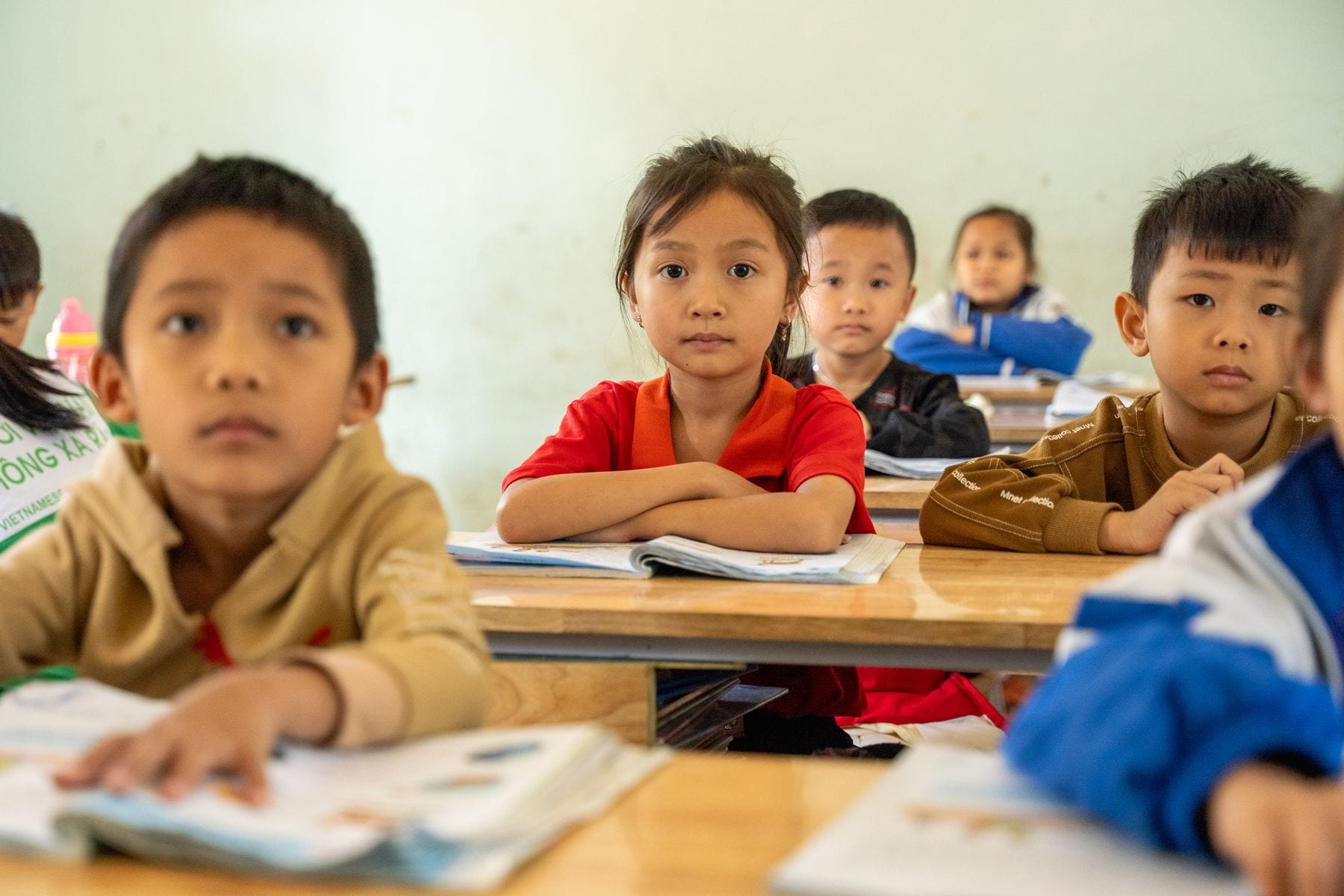
- Stage
- Grades 1 – 4
- Curriculum
- CBSE-aligned
- Group size
- Up to 20
What is taught
Four subjects, and what each of them means across the four years.
Mathematics
Number sense first, procedures second.
- Place value, and why it makes the four operations work
- Mental strategies before written methods
- Fractions, measurement, time and money
- Word problems — reading a question and deciding what it is asking
Most primary maths difficulty is a place-value gap wearing a different hat. We check that first, whatever the child was sent for.
The same subjects, four different jobs
What changes between Grade 1 and Grade 4 is not the subject list. It is what a child is expected to do without help.
- Grade 1
- Securing the basics
Blending and decoding become automatic. Number bonds are learned to the point of recall. Most of the year is spent making early skills reliable rather than adding new ones.
- Fluency
- Grade 2
- From words to meaning
Reading turns into comprehension. Written work moves past single sentences. Addition and subtraction extend into larger numbers, and multiplication starts as repeated addition.
- Comprehension
- Grade 3
- Working independently
Multi-step problems arrive in maths and multi-paragraph writing in English. The teaching shifts from showing a method to asking which method the child would choose.
- Independence
- Grade 4
- Consolidating for what comes next
Fractions, decimals and structured writing are secured. Study habits — planning, checking, correcting — are taught explicitly, because middle school assumes them.
- Readiness
Three parts, every time
Review
The session opens on last week's work. Anything that did not stick is retaught before anything new is introduced — which is the part a crowded classroom cannot afford to do.
Teach and practise
One concept, explained, modelled, then worked through with the teacher moving between children. Groups are capped at twenty so the teacher can see every child's work before the session moves on.
Apply and check
Independent work on what was just taught, marked in the session rather than after it, so a misunderstanding is corrected while the child still remembers what they were thinking.
Alongside and after
Every Primary session carries the Integrated Education Programme with it.